
Autokiletamise ajalugu - kuidas kõik alguse sai (ing.k)

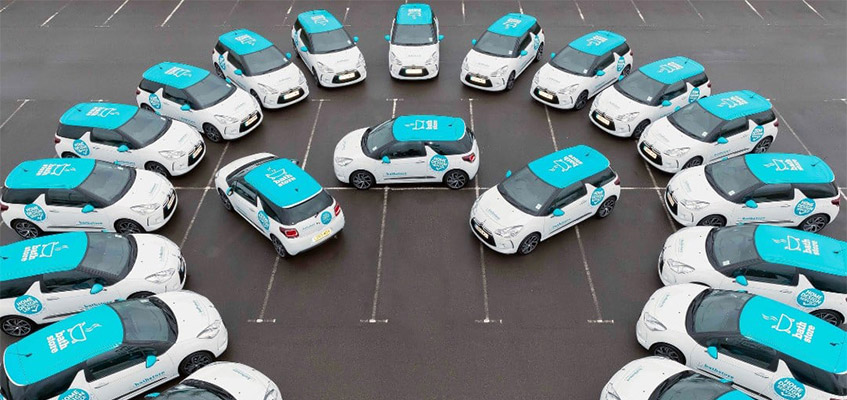
Most industry professionals and car enthusiasts view car wrapping as a relatively modern phenomenon. It might surprise you to know that car wrapping history goes back quite a bit further than just the last few decades.
Most industry professionals and car enthusiasts view car wrapping as a relatively modern phenomenon. It might surprise you to know that car wrapping history goes back quite a bit further than just the last few decades.
The Accidental Birth of Vinyl Car Wrapping Technology
Custom paint jobs go right back to the early days of automobiles. The first race cars featured individual numbers and the names of their sponsors. The idea of customizing a car’s paintwork quickly caught on. Soon, businesses were adorning their vehicles with brand names and slogans.
Using cars and trucks as moving billboards was a great way to promote a company. Unfortunately, it wasn’t exactly cheap or efficient. Every vehicle had to be painstakingly hand-painted by a skilled signwriter. And the paint itself didn’t stand up to the weather or road conditions all that well. There had to be a better way.
In 1926, American chemist and inventor Waldo Semon stumbled upon the process of producing vinyl chloride. Semon experimented with dissolving an unwanted material called polyvinyl chloride (PVC). Semon’s aim was to create a glue to bond rubber to metal. Instead, he came up with a new material - a durable, versatile, and incredibly flexible plastic polymer. At first, Semon used his invention to produce golf balls and shoe heels. It wasn’t long before the huge potential of vinyl chloride began to be realized.
With Semon’s invention, companies discovered they could create self-adhesive vinyl graphics. Instead of having to paint vehicles, graphics and signage could be added just by affixing individual vinyl decals. Completely by accident, Walter Semon had revolutionized vehicle customization.
The Rise of Modern Car Wrapping
Although Semon’s invention was a huge step forward, it was prohibitively expensive. Only major companies and government agencies could afford to put vinyl graphics on their vehicles.
During the 1950s, water slide vinyl decals were used on US Air Force jets and for advertising purposes by massive corporations like Coca-Cola. But only for smaller graphics. Most larger graphics and lettering were still done using paint.
As car culture exploded across America, 1950s drag racers and hot rodders individualized their rides with water slide vinyl decals. This marked the early beginnings of what we now know as car wrapping.
Despite the versatility of vinyl water slide decals, they had some major drawbacks. Water slide vinyl decals could leave white patches on the paintwork, cause water damage, and were often difficult to precisely apply to curved surfaces.
Car Wrapping Becomes Mainstream
Hand painting and water slide decals were pretty much the norm for the next three decades. Then advances in production technologies in the 1980s, began to make vinyl decals more affordable. Smaller companies were able to customize their vehicles using vinyl graphics.
These decals were still limited in their range of designs and colors. Image quality was often poor. Nevertheless, customizing the look of a car using decals and stickers started to become a popular pastime.
The breakthrough came from, of all places, the 1990s German taxi industry. Under German law, all taxis had to be a specific beige color. Vehicles had to be repainted before service, increasing the cost for fleet owners. The firm Kay Premium Marking Films came up with a clever solution: a full vinyl car wrap.
Unlike earlier decals, vinyl vehicle wraps fit around curves and rounded surfaces perfectly. Wraps could be easily removed leaving the original paintwork intact. New printing technologies opened up endless possibilities for designs and colors.
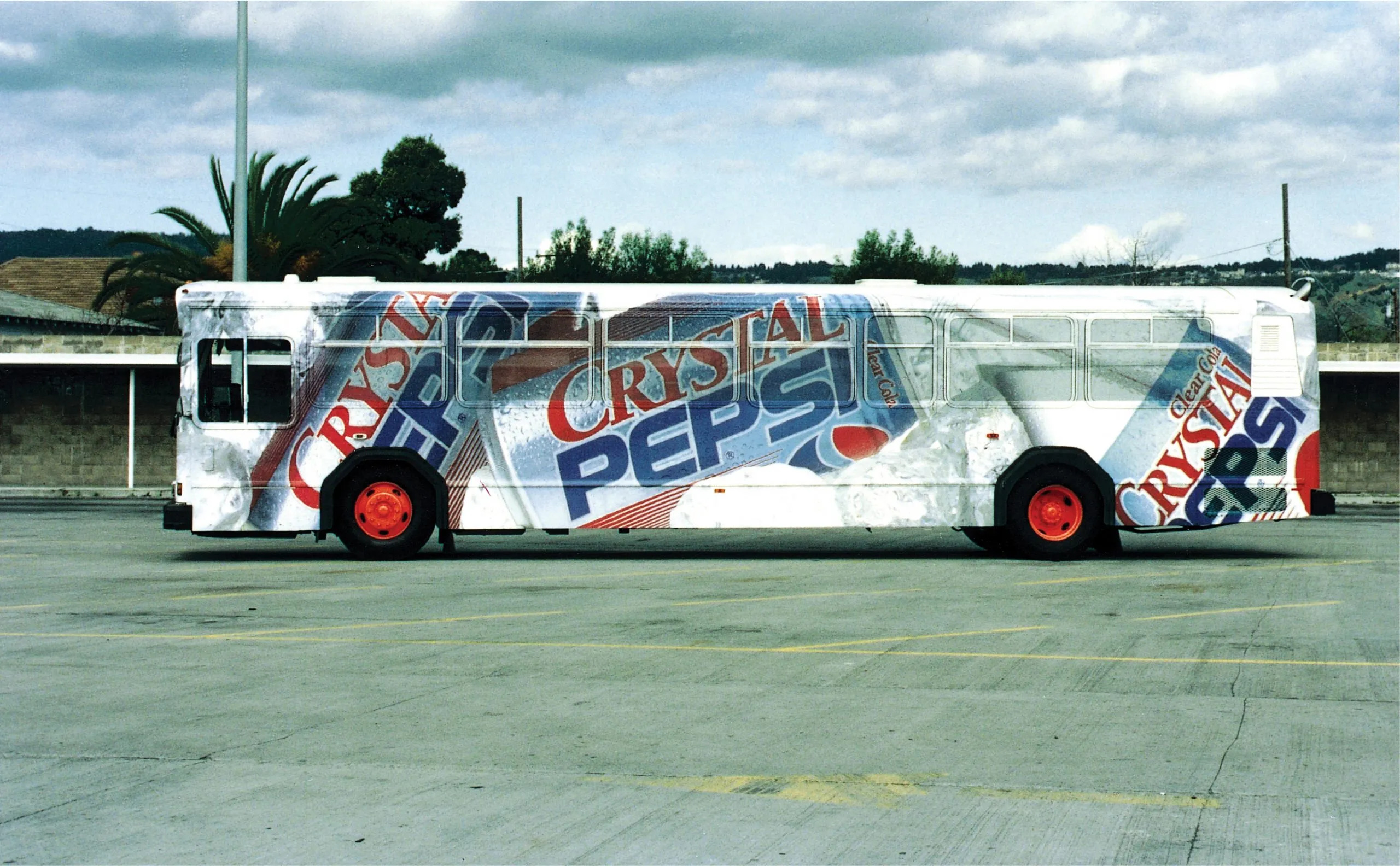
PepsiCo created the first car wrapping ad in 1993
In 1993, Pepsi was the first company to use a photo-realistic full-body wrap on a bus. This caused a sensation in the automotive world and brought car wrapping well and truly into the mainstream.
Car wraps are now massively popular worldwide. The Japanese have a dedicated car wrapping subculture called ‘itasha’, there’s a specific Californian car wrap style, and car wraps are commonplace across the US and Europe.
Recent refinements like air-release vinyl and 3D wraps have made car wraps sleeker and more stylish. Car lovers use wraps to customize classic automobiles, design competition vehicles, and personalize the latest models. Thanks to innovations from film manufacturers such as 3M, Avery, Arlon, Legend, Mactac and Orafol, the look of your vehicle is now limited only to the boundaries of your imagination. Find out more about these innovations in the Antalis catalogue.